
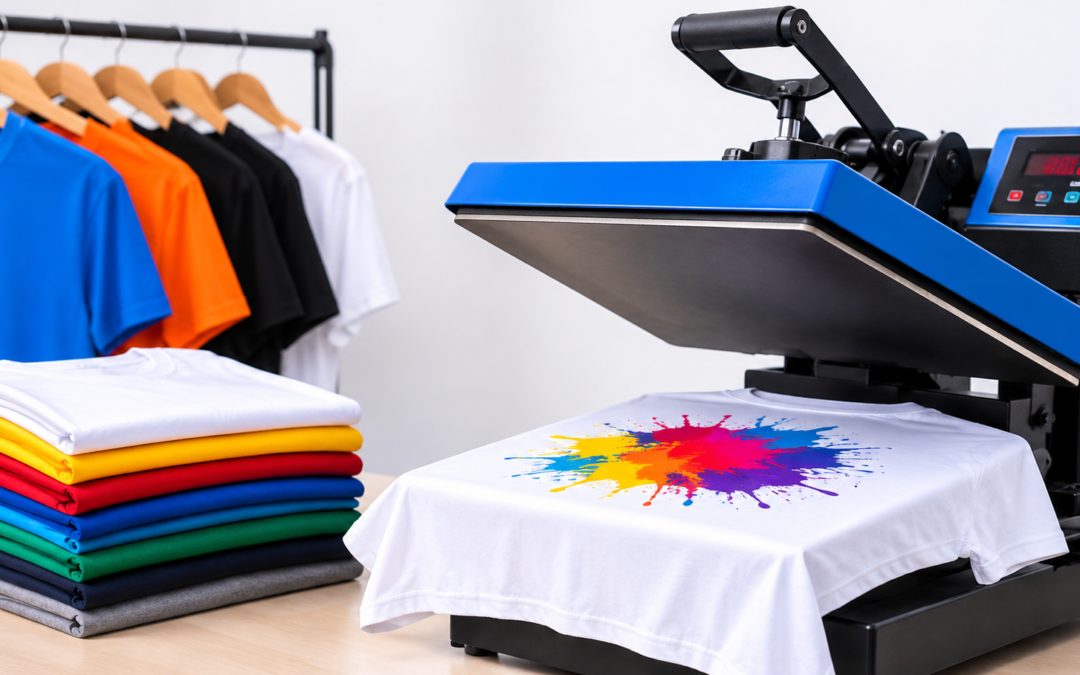
Creating high-quality printed T-shirts requires the right equipment, reliable printing techniques, and attention to detail. Whether you are starting a clothing business, producing promotional garments, or creating custom designs, choosing suitable printing equipment can help you achieve consistent results. A suitable T shirt printing machine can also help businesses handle orders more efficiently, experiment with new designs, and expand their personalised clothing services as demand grows.
Understanding Modern T-Shirt Printing Technology
T-shirt printing technology has evolved significantly, allowing businesses to produce customised garments with improved accuracy, vibrant colours, and professional finishes. Different machines are designed for specific printing methods, fabrics, and production volumes, so understanding their capabilities is important before making a purchase.
Depending on your requirements, printing equipment can be used for small personalised orders, bulk production, branded uniforms, promotional clothing, or creative fashion designs. Selecting the right setup helps streamline your workflow and minimise unnecessary production costs.
Different Types of T-Shirt Printing Machines
There are several types of printing equipment available, each offering different advantages depending on the design, fabric, and quantity of garments you want to produce.
Heat Press Machines
Heat press machines use controlled temperature, pressure, and time to transfer designs onto garments. They are commonly used with heat transfer vinyl, transfer papers, and DTF transfers.
- Suitable for personalised T-shirts, names, numbers, and logos.
- Ideal for small businesses and custom clothing orders.
- Available in flatbed, clamshell, swing-away, and multifunction designs.
Direct-to-Film (DTF) Printing Machines
DTF printing is a popular option for producing colourful designs on different types of fabrics. The design is printed onto a special film, coated with adhesive powder, and transferred onto the garment using heat and pressure.
- Supports detailed artwork and multicolour designs.
- Works with a variety of fabric types.
- Suitable for personalised clothing and small-to-medium production runs.
Direct-to-Garment (DTG) Printing Machines
DTG technology prints artwork directly onto the fabric using specialised textile inks. It is particularly useful for detailed images, gradients, and designs with multiple colours.
- Produces soft-feel prints on suitable garments.
- Works well for detailed artwork and photo printing.
- Useful for on-demand printing and customised orders.
Screen Printing Equipment
Screen printing uses mesh screens, ink, and a printing process to transfer designs onto fabric. It is commonly used for larger orders where the same artwork needs to be printed across multiple garments.
- Efficient for bulk T-shirt production.
- Creates durable prints when properly processed.
- Suitable for businesses producing promotional clothing and branded apparel.
What to Consider Before Buying Printing Equipment
Investing in printing equipment requires more than comparing machine prices. You should consider the type of orders you expect to receive, your available workspace, production requirements, and the materials you intend to use.
Important factors include:
- Printing volume: Choose equipment that can handle your expected daily or weekly production.
- Design capability: Consider whether you need detailed graphics, photographic prints, or simple logos.
- Operating costs: Include inks, transfer materials, maintenance, electricity, and consumables.
- Ease of use: User-friendly equipment can reduce learning time and production mistakes.
- Workspace requirements: Check the machine’s size, ventilation needs, power requirements, and working area.
How the Right Machine Improves Printing Results
The quality of printed clothing depends on more than the design itself. Proper temperature settings, pressure, garment preparation, ink quality, and curing techniques all affect the final result. Reliable equipment helps maintain consistency between garments and reduces common problems such as uneven transfers, peeling prints, fading, or poor alignment.
Modern printing technology makes it easier to transfer colourful artwork, logos, photographs, and text onto garments with precision, making custom clothing more accessible for businesses and individuals alike.
Final Thought
Choosing the right printing equipment is an important step towards producing attractive, durable, and professionally finished custom clothing. From heat presses and DTF printers to DTG systems and screen printing setups, each technology offers different benefits for various printing needs. By considering your budget, production volume, design requirements, and garment types, you can invest in equipment that supports your goals and helps deliver quality printed T-shirts consistently.