

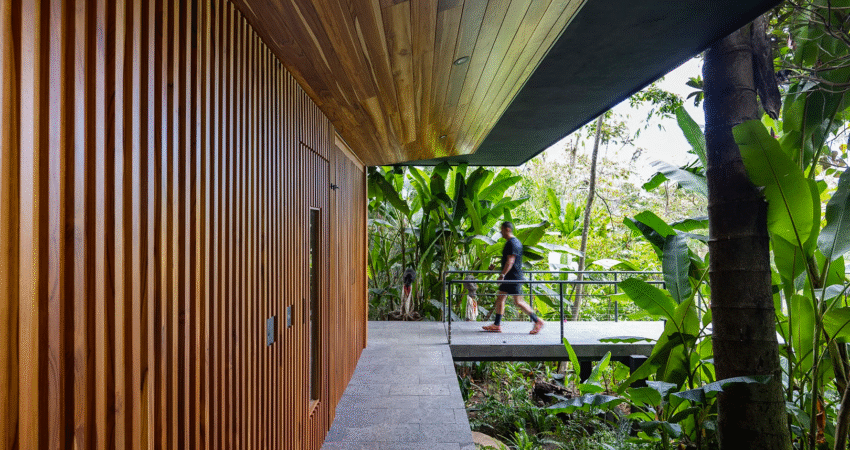

Luxury is no longer defined solely by exclusivity, scale, or material opulence. Today, true distinction in high-end tourism is measured by environmental intelligence, cultural sensitivity, and long-term ecological impact. In destinations like Costa Rica—where biodiversity, protected territories, and fragile ecosystems shape both identity and economy- the future of resort development demands a new architectural ethic. The evolution of hospitality architecture costa rica reflects this shift: projects must now balance experiential richness with regenerative responsibility.
At Voidcr, this transformation is not treated as a trend but as a structural rethinking of how architecture emerges from territory. Eco-luxury is not an aesthetic layer applied to a conventional development model; it is the outcome of rigorous sustainability studies integrated from the earliest planning phases. The future of high-end hospitality depends on how deeply environmental data, land intelligence, and human experience are interwoven into design strategy.
Understanding Eco-Luxury beyond Surface Sustainability
Table of Contents
Eco-luxury is often misunderstood as a combination of natural materials, green roofs, and energy-efficient systems. While these elements are important, they represent only the visible layer of environmental design. The real transformation begins before form is defined—during site analysis, ecosystem mapping, and feasibility evaluation.
In high-end hospitality architecture, sustainability studies should guide decisions about density, building orientation, circulation patterns, and land preservation. Instead of imposing a master plan onto a site, eco-luxury projects interpret terrain, hydrology, wind patterns, and biodiversity as generative forces. Architecture becomes a response to territory rather than an object placed within it.
This approach elevates luxury by embedding authenticity. Guests are no longer visiting an isolated resort; they are inhabiting a carefully preserved and restored ecosystem. The spatial experience becomes inseparable from environmental stewardship.
Sustainability Studies as a Design Foundation
Integrating sustainability studies into high-end hospitality architecture requires a shift in process. Rather than treating environmental consultants as external validators, their insights must inform the core architectural concept.
Comprehensive site analysis typically includes hydrological assessments, soil stability studies, biodiversity inventories, and climate responsiveness modeling. These studies reveal opportunities and constraints that define the architectural language. For example, understanding natural drainage systems may lead to elevated structures that protect watershed integrity. Wind pattern analysis may shape open-air corridors that reduce mechanical cooling demand.
When sustainability research guides architectural form, the result is not only energy efficiency but spatial harmony. The building feels inevitable—rooted in place rather than imposed upon it. In eco-luxury hospitality, this sense of belonging is what elevates the guest experience from comfort to immersion.
Territory-Driven Master Planning in Hospitality Development
High-end resorts frequently occupy expansive and environmentally sensitive territories. The scale of intervention amplifies both opportunity and risk. Territory-driven master planning ensures that development density aligns with ecological carrying capacity.
Instead of maximizing buildable area, regenerative hospitality planning identifies conservation zones, wildlife corridors, and reforestation areas as primary structuring elements. Circulation networks are designed to minimize fragmentation of habitats. Public and private zones respond to topography, preserving natural viewsheds and minimizing excavation.
This method reframes luxury as spatial generosity. Open landscapes, restored wetlands, and protected forests become central features of the guest journey. The architecture does not compete with nature; it choreographs encounters with it.
Material Intelligence and Carbon Conscious Construction
Material selection in eco-luxury projects must reflect both environmental and cultural responsibility. Locally sourced materials reduce transportation emissions and strengthen regional economies. Passive design strategies minimize operational energy consumption long after construction is complete.
However, carbon consciousness extends beyond material sourcing. It involves life-cycle analysis, construction methodologies, and adaptability planning. Buildings designed for longevity and flexibility reduce the need for future demolition and reconstruction.
In tropical environments, shading systems, cross-ventilation, and high-performance envelopes significantly lower energy demands. When sustainability studies inform these decisions early, architecture achieves both performance efficiency and refined aesthetics. The resulting spaces feel open, breathable, and deeply connected to climate.
Water, Landscape, and Regenerative Infrastructure
In biodiversity-rich contexts, water systems are central to sustainable hospitality architecture. Rainwater harvesting, greywater recycling, and natural filtration landscapes reduce strain on local resources. Restored wetlands and permeable surfaces improve groundwater recharge and biodiversity resilience.
Landscape design becomes more than decorative enhancement; it functions as ecological infrastructure. Native planting strategies support pollinators and wildlife while reducing irrigation demands. Outdoor spaces transition seamlessly into surrounding ecosystems, dissolving boundaries between built and natural environments.
For high-end hospitality developments, this integration enhances experiential value. Guests encounter living landscapes rather than manicured lawns detached from context. The architecture amplifies environmental awareness without compromising comfort or exclusivity.
Human Experience within Regenerative Environments
Luxury hospitality ultimately centers on human experience. Integrating sustainability studies does not diminish sensory richness—it deepens it. Natural ventilation introduces the rhythm of wind. Daylight variations create dynamic interior atmospheres. Carefully framed views foster emotional connection to place.
Wellness architecture particularly benefits from regenerative strategies. Biophilic design elements reduce stress and enhance cognitive clarity. Outdoor circulation paths encourage mindful movement. Private terraces and open pavilions dissolve barriers between interior refuge and surrounding ecosystem.
By embedding environmental intelligence into spatial planning, high-end hospitality architecture transforms into a restorative environment. Guests depart not only refreshed but reconnected to natural systems.
Economic Viability and Long-Term Value
One of the most critical aspects of integrating sustainability studies is aligning ecological responsibility with financial feasibility. Eco-luxury projects must demonstrate that regenerative design enhances long-term asset value.
Energy efficiency reduces operational costs. Responsible land stewardship strengthens brand positioning and attracts environmentally conscious travelers. Certifications and measurable environmental performance enhance market credibility.
More importantly, projects that protect and regenerate ecosystems safeguard the very landscapes that attract tourism investment. In this sense, sustainability is not an added expense—it is risk mitigation and value preservation. High-end hospitality developments that ignore environmental intelligence face increasing regulatory, reputational, and operational challenges in the coming decades.
Conclusion
The future of eco-luxury lies in redefining architecture as a participant within living systems. In contexts like Costa Rica, where ecological integrity is inseparable from national identity, this approach is not optional—it is essential. The evolution of hospitality architecture Costa Rica reflects a deeper commitment to territory, climate, and biodiversity.
For Voidcr, integrating sustainability studies into high-end hospitality architecture means designing beyond the visible structure. It involves shaping land, water, materials, and human experience into a cohesive regenerative framework. Eco-luxury becomes more than aesthetic refinement; it becomes environmental intelligence made spatial.


