
Introduction
Table of Contents
Proper outlet wiring is critical to ensure safety, convenience, and efficiency in your home. Faulty or outdated wiring can cause electrical shocks, fire hazards, and appliance damage. Whether you are adding new outlets or upgrading old ones, understanding best practices for outlet wiring delaware is essential. This guide walks homeowners through the steps for safe installation and highlights common mistakes to avoid.
Understanding Outlet Wiring Basics
- Types of Outlets
- Standard 120V outlets for general use
- GFCI (Ground Fault Circuit Interrupter) outlets for kitchens and bathrooms
- AFCI (Arc Fault Circuit Interrupter) outlets for bedrooms and living areas
- Wire Types
- Romex (NM cable): Common in residential wiring
- Copper vs. Aluminum: Copper is preferred for durability and conductivity
- Wire Gauge: Choose the correct gauge based on the outlet and appliance load
Step-by-Step Wiring Process
- Turn Off Power
Safety first! Switch off the circuit at the breaker panel and use a voltage tester to confirm. - Plan Your Outlets
Determine the number and location of outlets based on room usage. Avoid overcrowding circuits. - Run the Wires
Drill holes in studs or use existing channels to run wires neatly. Maintain proper spacing to avoid overheating. - Connect the Wires to the Outlet
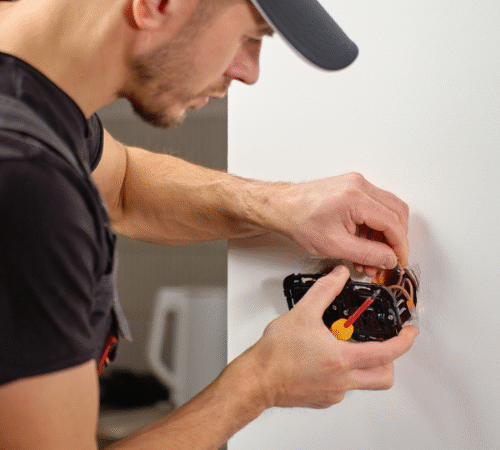
- Black (hot) wire → brass terminal
- White (neutral) wire → silver terminal
- Green or bare wire (ground) → green terminal
- Install the Outlet Box
Secure the box flush with the wall and ensure wires are not pinched. - Test the Circuit
Turn the breaker back on and use a tester to ensure the outlet works correctly.
Common Mistakes to Avoid
- Skipping the Ground Wire: Increases shock risk
- Overloading Circuits: Can lead to breakers tripping or fires
- Incorrect Wire Connections: Miswiring neutral and hot wires is dangerous
- DIY Without Knowledge: Complex circuits should always be handled by a licensed electrician
Energy Efficiency Considerations
- Install smart outlets with timers or remote controls
- Upgrade to LED-compatible outlets for energy savings
- Ensure wiring supports high-demand appliances without excessive load
Benefits of Proper Outlet Wiring
- Enhanced Safety: Reduces fire and shock hazards
- Improved Functionality: Supports modern electronics efficiently
- Cost Savings: Avoids emergency repairs and energy waste
- Increased Property Value: Professional wiring boosts home resale potential
Conclusion
Proper outlet wiring is essential for safety, efficiency, and functionality in modern homes. By following these steps and avoiding common mistakes, homeowners can ensure their electrical systems are safe, reliable, and energy-efficient. For complex wiring projects, always consult a licensed electrician.
Key Takeaways:
- Always prioritize safety and turn off power before wiring
- Use the correct wire type and gauge for each outlet
- Avoid common wiring mistakes to prevent hazards
- Proper installation improves home efficiency and value