

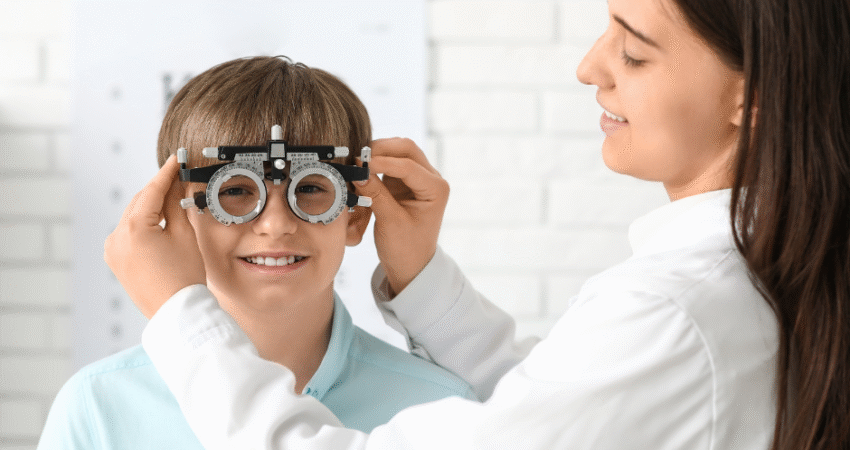

Most parents believe their children have healthy eyes because their children can read school boards and pass standard vision tests. The process of vision requires more than simple clear sight. The early years of childhood development bring rapid eye growth and undetected vision problems during this time period create learning difficulties together with behavioral issues and developmental disruptions. The pediatric health care system depends on complete eye exam for children because these tests serve as essential diagnostic tools.
Knowing the time and reason for your childs first eye exam will help you protect their eyesight while promoting their early development.
When Should a Child Have Their First Eye Exam?
Table of Contents
Pediatric eye care guidelines state that children must undergo their first complete eye examination between the ages of six months and twelve months. The first examination enables an eye care specialist to evaluate essential visual progress, eye movement control, and complete eye condition.
The first visit at the clinic requires the patient to return for more tests which should be scheduled at these times:
- At age 3, to evaluate visual acuity, eye coordination, and focusing ability
- Before starting school (around age 5–6), to ensure vision is ready for learning
- Annually during school years, or as advised by an eye care professional
These examinations support proper vision development which occurs throughout the various stages of childhood development.
Why Early Children’s Eye Exams Are So Important
Vision Is Closely Linked to Learning
Visual material covers approximately 80 percent of classroom learning activities. Children who experience difficulties with attention and eye tracking and depth perception will face challenges in reading and writing and comprehension tasks. Many children with undiagnosed vision problems are mistakenly thought to have learning or attention difficulties.
Many Eye Problems Have No Obvious Symptoms
Children often don’t realize their vision is abnormal because they assume everyone sees the same way they do.Parents do not see common eye conditions which include amblyopia lazy eye and strabismus eye turn and focusing issues yet these conditions still impact their children’s visual development.
Early Detection Can Prevent Long-Term Vision Loss
The visual system maintains its development process until the conclusion of early childhood. The early detection and treatment of eye conditions lead to better chances of successful correction. People who experience delayed diagnosis face permanent vision loss which doctors could have prevented.
What Happens During a Children’s Eye Exam?
The complete eye examination for children takes into account their developmental stage while ensuring a comfortable testing experience. The assessment process includes several components which include:
- Assessment of visual acuity and eye tracking
- Evaluation of eye alignment and coordination
- Focusing and depth perception testing
- Examination of eye health using specialized instrumentsThe testing process for infants and toddlers requires eye movement observation and response tracking as a substitute for letter reading.
Why School Vision Screenings Are Not Enough
School vision screenings provide useful benefits but their testing capabilities are restricted. Screenings typically check only distance vision and they miss eye health problems which affect focusing and coordination. A comprehensive eye exam provides a far more complete assessment and should not be replaced by a screening.
Signs Your Child May Need an Eye Exam Sooner
Parents should take their child to see an eye doctor when they observe the following symptoms before their scheduled eye exam:
- The child shows squinting behavior and head tilting behavior
- The child experiences headaches and rubs their eyes
- The child struggles with reading comprehension and has a short attention span
- The child demonstrates poor hand-eye coordination ability
- The child reports seeing blurry or double images
The symptoms need assessment because they suggest hidden vision issues which require medical examination.
Supporting Lifelong Vision Health
The purpose of children’s eye exams extends beyond vision correction because they help children develop their abilities and achieve academic success and maintain their eye health throughout their lives. The eye care professionals use regular exams to track changes in patients’ conditions and administer early treatment when necessary and educate parents about vision protection methods for their growing child.
Final Thoughts
The most effective method for protecting your child’s eyesight and medical health requires you to schedule their initial eye examination and all subsequent appointments. Children require clear and comfortable vision to gain the confidence and ability to explore the world while they learn and achieve success throughout their entire lives.




