

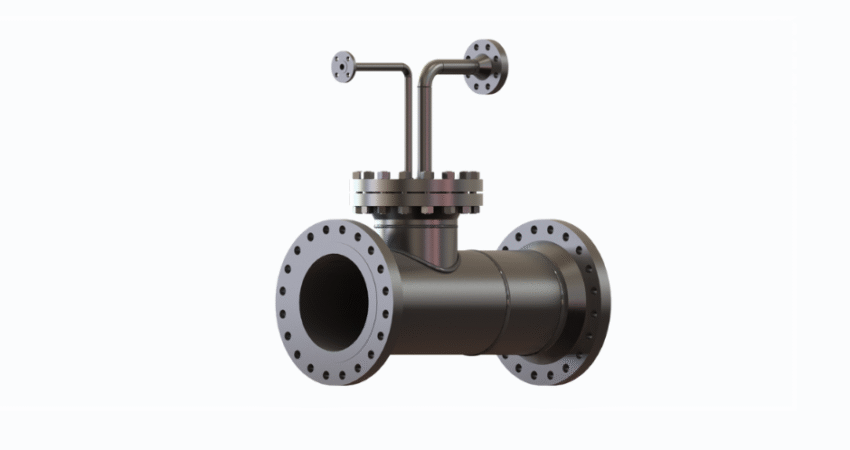

In modern industrial steam systems, superheated steam is commonly used for efficient transport across long distances. However, when it reaches the point of use especially in heat transfer applications it must be returned closer to its saturated state for optimal performance. This is where a Venturi Desuperheater becomes essential. By precisely reducing the temperature of superheated steam, the equipment ensures improved condensation efficiency and consistent process control. At Croll Reynolds, venturi-based desuperheating technology is engineered to deliver reliable, low-maintenance performance across a wide range of industrial applications. Their approach focuses on high-shear atomization, turbulent mixing, and pressure recovery to maximize cooling efficiency without introducing mechanical complexity.
Why Superheated Steam Must Be Desuperheated
Table of Contents
Superheated steam contains more thermal energy than saturated steam at the same pressure. While this is beneficial for minimizing condensation during transport, it reduces efficiency in heat exchange operations. Saturated steam transfers heat more effectively because it condenses at a constant temperature, releasing latent heat directly into the process. If superheated steam is not cooled before entering heat exchangers, distillation systems, evaporators, or crystallizers, the result can be inconsistent temperature control and lower heat transfer performance. Desuperheating restores the steam to a condition closer to saturation, allowing downstream equipment to operate at peak efficiency.
The Venturi Principle in Steam Desuperheating
The venturi design is central to efficient steam cooling. In a venturi desuperheater, superheated steam enters the unit at a controlled velocity. A portion of this steam is directed through a converging section that accelerates the flow. As velocity increases, pressure decreases, creating a localized reduced-pressure zone within the throat of the venturi. This pressure differential plays a critical role. It draws cooling water into the steam flow without the need for complex mechanical pumping systems. The geometry of the venturi ensures that this process occurs smoothly, maintaining stable operation across varying load conditions.
High-Shear Atomization: The Core of Cooling Efficiency
The defining feature of venturi desuperheating technology is high-shear atomization. Cooling water enters the desuperheater nozzle at relatively low velocity, forming a thin liquid film. Meanwhile, the accelerated steam flow creates a very high differential velocity between the steam and the water surface. This velocity difference generates intense shear forces and turbulence. The dynamic energy of the steam breaks the surface tension of the water film, transforming it into extremely fine droplets. These droplets form a mist that disperses uniformly within the steam flow. The smaller the droplets, the greater the surface area available for heat exchange. This is the fundamental reason why high-shear atomization maximizes cooling efficiency. Fine droplets evaporate rapidly, absorbing excess heat from the superheated steam and reducing its temperature quickly and uniformly.
Concurrent Flow and Rapid Heat Exchange
In a venturi desuperheater, steam and atomized water move in concurrent flow. This means both phases travel in the same direction, allowing continuous interaction as evaporation occurs. The fine mist remains suspended in the steam stream long enough to ensure complete evaporation before reaching downstream equipment. As the water droplets evaporate, they absorb sensible heat from the steam. This phase change process reduces the steam temperature toward its saturation point. Because the droplets are extremely small and evenly distributed, temperature reduction is uniform across the cross-section of the pipeline. Uniform cooling prevents thermal gradients, minimizes mechanical stress on piping and equipment, and ensures stable process control.
Pressure Recovery and Minimal Steam Pressure Drop
One of the most important design considerations in any steam system is pressure stability. Excessive pressure drop can reduce overall system efficiency and increase energy consumption. The venturi desuperheater addresses this concern through its expanding throat section. After steam accelerates and mixes with atomized water in the converging section, it enters a short diverging section that allows pressure recovery. This design ensures that the overall pressure drop on the steam side is negligible. By combining efficient temperature reduction with minimal pressure loss, the venturi system maintains overall steam system performance while delivering precise cooling.
Nozzle Design and Turbulent Mixing
The water injection nozzle in a venturi desuperheater is typically constructed from stainless steel and shaped as a converging stabilizing diverging nozzle. This geometry promotes controlled turbulence, ensuring thorough mixing of steam and atomized water. Custom nozzle configurations such as single, multi, or spindle-type designs allow the system to adapt to varying steam flowrates and turndown ratios. The atomization pattern is engineered to prevent side-wall erosion, protecting piping and extending equipment life.
Operating Requirements for Effective Performance
Proper operation requires that cooling water pressure at the desuperheater inlet be at least two bar higher than the incoming steam pressure. This differential ensures consistent water injection and stable atomization. Because the system relies on steam energy rather than mechanical moving parts, maintenance requirements are minimal. There are no lubricants, refrigerants, or chemical additives involved in the cooling process. This simplicity translates into lower operating costs and long-term durability.
Applications Across Industrial Sectors
Venturi desuperheaters are widely used in industries where controlled steam temperature is essential. In chemical processing, they support distillation, drying, and flash cooling operations. In power plants, they help maintain turbine efficiency by conditioning steam and removing non-condensable gases. Oil and gas facilities rely on desuperheating for refinery processes and product distillation, while pulp and paper plants use conditioned steam in crystallization and evaporation systems. Across all these sectors, efficient temperature control enhances process stability and energy performance.
Conclusion
High-shear atomization is the defining advantage of the venturi approach to steam cooling. By leveraging velocity differentials, turbulence, and precision nozzle geometry, the system transforms cooling water into a fine mist that evaporates rapidly and uniformly. The result is efficient heat absorption, negligible pressure drop, and reliable restoration of steam to near-saturated conditions. The Desuperheater technology developed by Croll Reynolds exemplifies this engineering principle. Through custom nozzle configurations, durable construction materials, and venturi-driven performance, the system delivers precise temperature control with minimal maintenance. For industries that depend on stable, efficient heat transfer, venturi desuperheating remains a proven and highly effective solution.


