
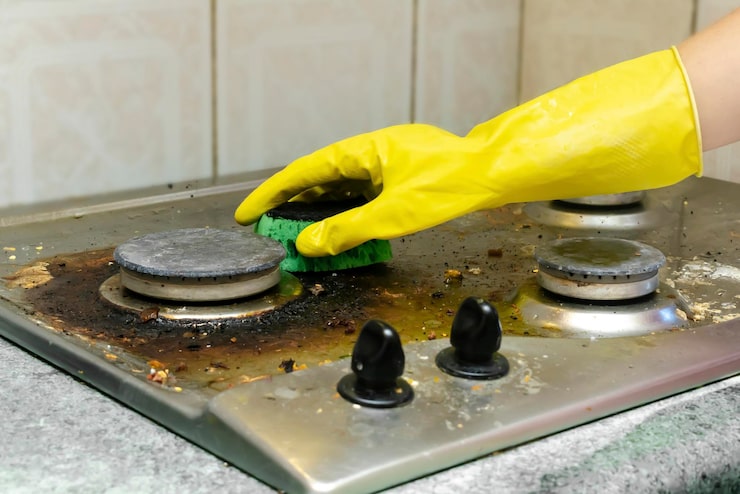
Restaurants produce grease, smoke, steam and airborne cooking particles every day. Over time, these contaminants can settle on extraction canopies, filters, fans and other parts of a kitchen ventilation system. Regular canopy cleaning in Glasgow can help restaurants manage this build-up and maintain a cleaner, safer working environment. While kitchen staff can handle routine surface cleaning, professional maintenance is important for dealing with contamination that accumulates in less accessible areas. Understanding how professional cleaning works and why it matters can help restaurant owners develop a practical maintenance routine that supports ventilation performance, workplace safety and the long-term condition of their extraction equipment.
Why Does Grease Accumulate Around Kitchen Canopies?
Grease accumulation is a natural consequence of commercial cooking. Processes such as frying, grilling, roasting and deep-frying release tiny grease particles into the air. The extraction system draws these particles away from cooking appliances, but not all of them are captured by filters.
Over time, residue can settle on the internal and external surfaces of the canopy. Busy kitchens can experience faster accumulation because cooking equipment operates for many hours each day.
The type of food being prepared, cooking temperatures, ventilation performance and filter condition can all influence how quickly deposits form. Without regular attention, a thin layer of residue can gradually become a thicker and more difficult-to-remove build-up.
What Does Professional Cleaning Involve?
Professional cleaning is designed to address areas that routine kitchen cleaning may not reach effectively. Depending on the system and its condition, cleaning can involve accessible canopy surfaces, filters, extraction components and associated areas where grease has accumulated.
Specialist technicians can assess the condition of the equipment before carrying out appropriate cleaning procedures. This allows them to identify areas requiring additional attention rather than relying only on visible surfaces.
Professional maintenance should also be carried out using suitable methods and equipment for commercial extraction systems. This is particularly important in busy restaurants where ventilation equipment may be extensive or difficult to access.
The objective is to remove accumulated contamination while supporting the proper operation of the extraction system.
How Can Cleaning Support Better Airflow?
Effective extraction is essential in a commercial kitchen because it helps remove heat, smoke, steam and airborne cooking particles from the working environment.
When grease and other contaminants accumulate on components, the system may become less effective. Reduced airflow can contribute to a hotter kitchen and allow cooking fumes or odours to linger.
Cleaning contaminated components can help the extraction system operate more effectively. It does not guarantee that every airflow problem will be resolved, because issues such as damaged fans, blocked ductwork or poorly designed systems may have other causes.
However, keeping the system clean removes one important source of performance problems and allows businesses to identify other ventilation issues more easily.
Why Is Grease Build-Up a Fire Safety Concern?
Grease is combustible, which means accumulated deposits within extraction systems should not be ignored. A commercial kitchen contains multiple heat sources, including ovens, grills, fryers and cooking appliances.
If grease is allowed to accumulate over an extended period, it can create an unnecessary fire safety concern. Maintaining clean extraction equipment is therefore an important part of a wider kitchen safety strategy.
Cleaning alone should not be considered complete fire prevention programmed. Businesses should also follow appropriate fire safety procedures, maintain cooking equipment correctly and ensure staff understands emergency processes.
A planned cleaning schedule can nevertheless help reduce the amount of combustible residue present within the extraction system.
Can Professional Cleaning Help Reduce Kitchen Odors?
Persistent cooking odors can become noticeable when grease and food-related residues accumulate within ventilation equipment. Although cooking naturally creates smells, poorly maintained extraction systems can contribute to odors remaining in the kitchen for longer.
Cleaning contaminated surfaces and components can help remove some of the residue responsible for unpleasant smells. Improved extraction performance may also help move cooking fumes away from occupied areas more effectively.
This can be particularly useful for restaurants operating in busy commercial buildings, where persistent odors may affect staff, customers or neighboring premises.
If strong odors continue after cleaning, businesses should investigate other possible causes, such as drainage problems, inadequate ventilation or issues with cooking equipment.
How Does Professional Maintenance Protect Equipment?
Extraction systems represent a significant investment for commercial kitchens. Fans, filters, canopies and associated components need appropriate care to remain functional.
Heavy contamination can place additional demands on ventilation equipment and may contribute to operational problems over time. Routine professional cleaning helps businesses identify contamination before it becomes more difficult to manage.
During maintenance, technicians may also notice signs of damage, deterioration or unusual conditions that require further investigation. Early identification can give restaurant operators an opportunity to address problems before they cause greater disruption.
A maintenance plan should therefore consider both cleaning and the general condition of the ventilation system.
How Often Should Restaurants Arrange Cleaning?
There is no single cleaning frequency suitable for every restaurant. The appropriate schedule depends on factors such as the type of cooking, operating hours, volume of food prepared and amount of grease produced.
A busy takeaway that relies heavily on frying may require more frequent attention than a small café with lighter cooking activities.
Businesses should consider their usage patterns when developing a maintenance schedule. Visible grease, persistent odors, reduced airflow and contamination around extraction components can indicate that additional attention may be necessary.
Keeping records of cleaning and maintenance can also help restaurant managers track service history and plan future work rather than relying on memory.
What Can Kitchen Staff Do Between Professional Services?
Professional cleaning works best when supported by good everyday habits. Kitchen staff should clean accessible surfaces regularly, maintain filters according to the appropriate guidance and avoid allowing visible grease to accumulate.
Employees should also be encouraged to report changes such as unusual fan noises, smoke lingering in the kitchen or noticeable reductions in airflow.
These simple measures do not replace specialist cleaning, but they can help control surface contamination between professional services.
Clear staff responsibilities also make it easier for restaurant managers to identify problems quickly and arrange appropriate maintenance when required.
Conclusion
Managing grease build-up requires more than wiping down visible kitchen surfaces. Professional cleaning can help address accumulated contamination, support ventilation performance, reduce combustible residue and contribute to a more comfortable working environment. When combined with routine staff cleaning, inspections and suitable maintenance schedules, it becomes an important part of responsible commercial kitchen management.
For specialist ventilation cleaning and compliance support, Pro Vent Compliance provides professional services for commercial kitchens and other business premises, helping operators maintain their extraction and ventilation systems effectively.