
Introduction
The rainforest around La Fortuna, Costa Rica, offers a different experience as afternoon light gradually gives way to darkness. Birds become harder to distinguish among the trees, familiar sounds blend into a more complex natural soundtrack, and small movements along the trail begin to attract attention. twilight tours in la fortuna allow visitors to experience this transition between two distinct periods of rainforest activity. Rather than exploring exclusively in daylight or arriving after night has fully settled, travellers can observe how the changing light transforms the forest environment. Frogs, insects, birds, and other wildlife may become noticeable in different ways as conditions change. With a patient approach and guidance from a knowledgeable naturalist, the experience becomes an opportunity to understand the rainforest beyond its appearance during the day.
1.The Forest Looks Different as Daylight Fades
During daylight, visitors can easily distinguish colours, recognise plants, and observe movement across different layers of vegetation. As the sun lowers, these visual details gradually become less obvious. Shadows deepen beneath the trees, distant branches become harder to examine, and the trail takes on a different atmosphere. This change encourages visitors to pay closer attention to details they might overlook during a daytime walk. A slight movement among leaves or a shape against a tree trunk can become a reason to pause and observe more carefully. The forest has not suddenly changed into a different ecosystem, but the conditions under which people experience it have changed considerably. This transition makes twilight particularly interesting for nature enthusiasts who want to understand how light influences wildlife observation and the overall experience of exploring a tropical forest.
2. Listen to the Sounds That Become More Noticeable at Dusk
One of the most interesting changes during the transition to darkness is the way visitors perceive the forest’s sounds. During the day, bird calls, insects, wind, and conversations can overlap. As the light fades and a group slows its pace, individual sounds may become easier to distinguish. Insects can produce a continuous background chorus, while frogs may call from vegetation near damp areas. Some birds may remain audible even when their movements become difficult to follow visually. Learning to listen carefully helps visitors direct their attention towards different parts of the habitat. A guide can explain the sounds that are heard and help distinguish likely sources without claiming that every call indicates a visible animal. Pausing quietly also allows the group to appreciate the rainforest as a sound-rich environment rather than treating the walk simply as a search for photographs.
3. Why Frogs and Insects Deserve Attention During Twilight
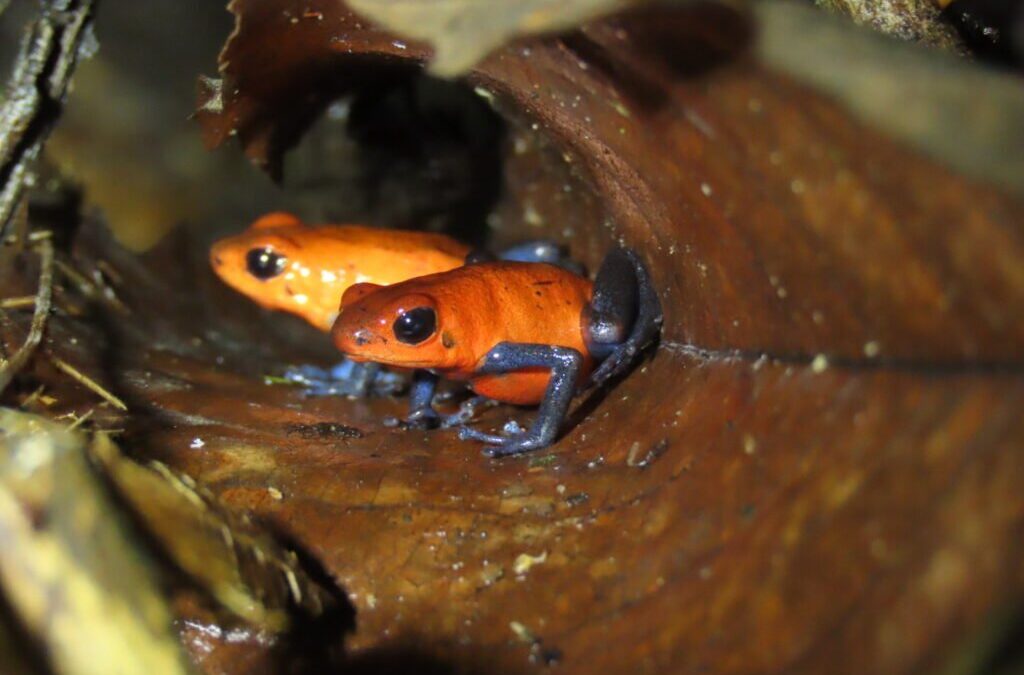
Visitors often begin a rainforest excursion hoping to see a recognisable mammal or a colourful bird. However, frogs and insects can provide equally interesting opportunities to observe wildlife during the transition from day to night. Their colours, shapes, calls, and movements reveal how different species occupy the same environment. A frog resting on a leaf, for example, may be difficult to distinguish from its surroundings until someone notices a subtle movement. Insects may also become more noticeable through their sounds or their presence on vegetation. These small encounters encourage visitors to look closely instead of scanning the forest only for larger animals. They also provide opportunities to learn about camouflage, feeding behaviour, and the relationships between species. The wildlife encountered varies with local conditions, but an interest in smaller creatures can make a twilight walk rewarding even when larger animals remain hidden.
4. What Makes a Twilight Experience Different From a Night Walk?
A la fortuna night walk generally focuses on exploring the forest after darkness has settled, whereas a twilight experience begins during the transition from daylight into evening. This difference changes the way visitors experience the trail. At twilight, there may still be enough natural light to observe vegetation and landscape features while the first signs of nighttime activity become noticeable. Later, artificial lighting and careful listening become more important for observing the immediate surroundings. Neither experience guarantees particular wildlife sightings, and both offer opportunities to learn about the forest from different perspectives. Travellers deciding between them should compare departure times, tour duration, route details, and the type of experience they prefer. Those who enjoy watching an environment gradually change may appreciate twilight, while visitors particularly interested in nocturnal wildlife may prefer an outing that continues after dark. Checking the actual itinerary before booking helps establish which option best suits individual interests.
5. How Guides Help Visitors Notice Small Details
A forest trail can appear quiet or empty to someone unfamiliar with wildlife observation. However, an experienced naturalist may notice movement, sounds, or other details that a first-time visitor misses. A guide can encourage the group to scan branches, examine vegetation carefully, and pause when something interesting is heard nearby. These techniques help visitors learn how to observe the environment rather than simply follow a route. Guidance can also provide context about animal behaviour and the importance of protecting natural habitats. The experience becomes more engaging when visitors understand why a particular observation matters, even if the animal remains partly concealed. Asking questions and allowing time for explanations can add depth to the walk. Good wildlife guiding should also set realistic expectations: animals move freely, conditions change, and a natural encounter cannot be scheduled with the certainty of a staged attraction.
6. What to Bring for a Comfortable Twilight Walk
Preparing for an evening rainforest excursion does not require extensive equipment, but a few practical choices can improve comfort. Closed-toe walking shoes with a reliable grip are useful on forest trails, particularly if recent rain has left the ground damp. Lightweight clothing and a light rain jacket may be appropriate depending on the weather. Insect repellent can also be useful in tropical environments. A small bag helps keep personal items organised while leaving hands free for walking. If you plan to take photographs, remember that changing light can make clear images more difficult to capture as evening progresses. A smartphone or camera should not become a distraction from observing the surroundings directly. Visitors should also follow the guide’s instructions about lighting, trail boundaries, and safe movement. Preparing in advance allows more attention to remain on the experience instead of equipment or avoidable discomfort.
7. How Weather Can Change the Twilight Experience
Rainforest conditions can change quickly, and the weather may influence both the comfort of a walk and the wildlife visitors notice. Rain can make leaves glisten, increase the moisture on the trail, and alter the sounds heard throughout the forest. Depending on local conditions, some creatures may become more noticeable while others remain concealed. Cloud cover can also change how quickly the available natural light fades. These variations mean that two visits along the same route may feel very different. Travellers should check the operator’s current guidance about weather, suitable clothing, and any changes to departure arrangements. It is equally important to avoid assuming that rain or humidity will guarantee particular sightings. A flexible attitude helps visitors appreciate the environment as it is rather than comparing every moment with photographs taken in different conditions. The changing atmosphere is part of what makes rainforest exploration distinctive.
8. Responsible Wildlife Observation at the Day-to-Night Transition
Wildlife observation should always prioritise the wellbeing of animals and the protection of their habitat. As daylight fades, visitors may be tempted to move closer to an animal or use stronger lighting to obtain a clearer photograph. These actions can disturb wildlife and create unnecessary risks. Instead, remain on designated paths, maintain an appropriate distance, and follow the guide’s instructions about torches and photography. Avoid touching, feeding, chasing, or attempting to attract animals. Quiet observation is particularly useful when trying to understand natural behaviour because it allows visitors to watch without deliberately changing what an animal is doing. It is also important to remember that not every walk produces the same sightings. Responsible tourism values the habitat and the learning experience, not just the number of photographs taken. Respecting these principles helps preserve the rainforest for wildlife and for future visitors.
Final Thoughts
The transition from daylight to darkness reveals a different perspective on the rainforest around La Fortuna. Changing light encourages closer observation, while the evolving sounds of frogs, insects, and birds invite visitors to slow down and listen. The experience is not simply about finding a particular animal; it is about understanding how a living environment can feel different as evening approaches. Weather, habitat, and natural animal behaviour all influence what visitors may encounter, making patience and realistic expectations essential. Travellers who prepare appropriately and follow responsible wildlife-viewing practices can appreciate the forest without disturbing its inhabitants. La Fortuna Hikes And Trails offers nature-focused experiences for visitors interested in discovering the area’s rainforest environment. By approaching twilight with curiosity rather than a checklist of guaranteed sightings, travellers can gain a more meaningful appreciation of Costa Rica’s wildlife and the importance of protecting its natural habitats.