
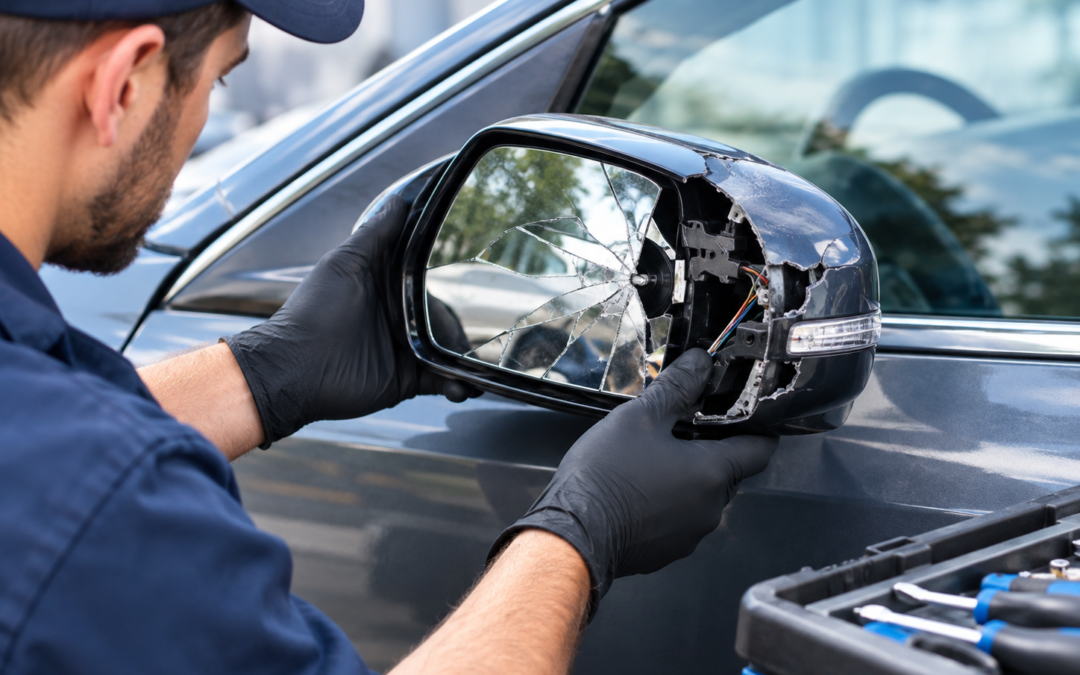
A car’s wing mirror plays an important role in helping drivers understand what is happening around their vehicle. Even a minor impact can crack the mirror glass, damage the outer housing, affect the folding mechanism or interfere with electrical functions. Knowing what to do after damage can help prevent further problems and restore safe visibility.
Assess the Damage Before Driving
The first step after discovering wing mirror damage is to inspect the mirror carefully. Look for cracked or missing glass, a loose housing, exposed wiring, damaged indicators, or a mirror that is no longer positioned correctly.
If the mirror is hanging loose or has sharp broken parts, it may be unsafe to continue driving until the damage has been assessed. A mirror that appears to have only cosmetic damage may also have internal problems caused by the impact.
Determine Which Component Has Failed
A complete wing mirror consists of several components, and not every fault requires the entire assembly to be replaced. Damaged glass, for example, may be replaceable independently when the housing and adjustment system are still functional.
Other issues can involve the mirror casing, mounting point, adjustment motor, folding mechanism, wiring or integrated indicator. Identifying the affected component is an important part of effective wing mirror repair.
Check Power and Adjustment Functions
If the vehicle has electrically adjustable mirrors, test the controls carefully. A mirror that no longer moves horizontally or vertically could have a problem with its motor or internal mechanism.
Electric folding mirrors should also be checked for normal operation. If the mirror folds partially, makes unusual noises or becomes stuck, the folding mechanism may have been affected.
Avoid repeatedly operating a damaged mechanism because forcing a faulty component could potentially cause additional damage.
Look for Electrical Problems
Many modern vehicles incorporate electrical features into their wing mirrors. Depending on the vehicle, these may include heated glass, power adjustment, electric folding and turn indicators.
If one of these functions stops working after an accident or impact, the problem may involve wiring, connectors, a motor or another internal component rather than the mirror glass itself. Electrical faults are best assessed before ordering replacement parts.
Consider the Housing and Mounting Point
The outer housing protects the internal mirror components from weather and road debris. Cracks or breaks in the casing can leave these components exposed.
The point where the mirror attaches to the vehicle should also be inspected. A loose or incorrectly positioned mirror could indicate damage to the mounting mechanism. Repairing only the visible section may not be sufficient if the mounting structure has also been affected.
Repair or Replace?
The appropriate solution depends on the extent and location of the damage. If only one component has failed and the remaining parts are in good condition, repairing or replacing that component may be practical.
More extensive impact damage involving the housing, mounting structure and several internal components may make complete mirror replacement a better option. Vehicle make, model, mirror specification and available parts should all be considered before making a decision.
Why Prompt Repairs Matter
A damaged wing mirror should not be treated as an unimportant cosmetic issue. Side mirrors provide valuable visibility when changing lanes, manoeuvring, parking and monitoring surrounding traffic.
Driving with cracked glass, an unstable housing or an incorrectly positioned mirror can reduce the driver’s ability to see approaching vehicles and other road users. Addressing the problem promptly can help restore proper visibility and functionality.
Choose the Right Replacement Components
Modern wing mirrors are not necessarily interchangeable between different vehicle versions. Features, dimensions, mounting points and electrical connections can vary even between closely related models.
Before purchasing a replacement component, drivers should confirm that it is suitable for their specific vehicle. This is particularly important when the mirror includes power adjustment, heating, folding functions or an integrated indicator.
Final Thoughts
When a car’s wing mirror is damaged, the best approach is to identify the actual source of the problem before deciding on a repair or replacement. A cracked glass panel, damaged housing, faulty motor and electrical problem can require very different solutions.
A careful assessment can help determine whether an individual component can be repaired or replaced or whether the complete assembly needs attention. Taking action promptly not only protects the mirror from further damage but also helps maintain the visibility drivers need on the road.