
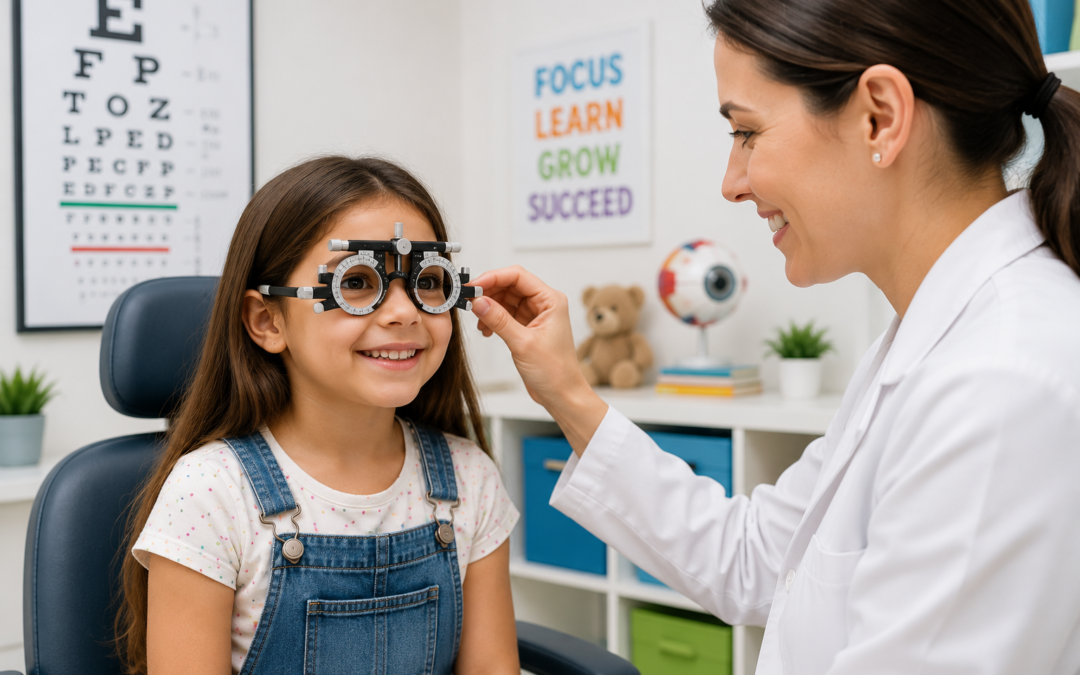
Parents often wonder when their child should have their first eye examination, especially when there are no obvious signs of a vision problem. Children may not realize that their vision is different from normal, and they may not always be able to explain difficulties with seeing, reading, focusing, or using both eyes together. According to the children’s eye exam information provided by the practice, an initial examination is recommended at six months of age, followed by another examination between two and five years, and then annually. For families looking for a Childrens Eye Exam Brampton, understanding this schedule can help parents plan appropriate eye care as their child grows. Early examinations can also give an optometrist an opportunity to assess important aspects of vision and eye health during key stages of childhood development.
Why Early Eye Exams Matter
Children’s vision plays an important role in their development and everyday activities. The clinic explains that much of early learning is visual, making healthy vision important during childhood. A young child may not know that their eyesight is not developing normally because they have no previous experience of seeing differently. This means waiting for a child to complain about blurry vision may not always be the best approach. A professional examination can assess different aspects of the visual system and help identify concerns that may otherwise go unnoticed. The practice’s children’s eye examination service is designed specifically for younger patients, using clinical tools and approaches intended to make the experience comfortable while allowing the optometrist to evaluate the child’s vision and eye health.
When Should the First Examination Happen?
The practice recommends that children have their first eye test at six months of age. A second examination is recommended between the ages of two and five, followed by yearly examinations. This schedule provides opportunities to assess vision during different stages of childhood rather than waiting until a child begins school. The clinic also states that children who require eyeglasses should have an annual check or follow the recommendation provided by their optometrist. The appropriate timing can therefore depend on the individual child and the findings from previous examinations. Parents who are unsure when their child should be assessed can discuss their child’s age, visual development, and any concerns with the clinic when arranging an appointment.
What Does a Children’s Eye Exam Check?
A children’s examination can involve several assessments rather than simply asking a child to read letters from a chart. The clinic describes testing for eye tracking, focusing ability, peripheral awareness, distance and near visual acuity, depth perception, colour perception, and eye muscle teaming. These assessments help the optometrist understand how the child’s eyes work individually and together. The clinic uses pictures, symbols, and other child-friendly methods when assessing younger children, so a child does not need to know the alphabet before having an examination. Depending on the child and the examination findings, other assessments may also be considered. The goal is to understand the child’s visual system in a way that is appropriate for their age and ability.
Does My Child Need to Know the Alphabet?
No. Parents sometimes delay an eye examination because they assume their child must be able to recognize letters before visiting an optometrist. The practice specifically explains that this is not necessary. Children’s vision can be assessed using pictures, shapes, symbols, and other methods suited to younger patients. This is particularly useful when examining babies, toddlers, and preschool-aged children who have not yet learned the alphabet. During the examination, the optometrist can adapt the approach to the child’s age and ability. This can make the appointment less intimidating for both the child and parent. Parents therefore do not need to wait until their child starts school or becomes comfortable reading letters before arranging an eye examination. Early assessment is intended to be accessible to young children.
Can an Eye Exam Find Problems Early?
One reason early childhood examinations are important is that some vision problems may not be obvious to parents or children. The clinic notes that children may have difficulty recognizing or explaining that something is wrong with their vision because they may assume the way they see is normal. During an examination, an optometrist can assess different parts of the visual system and look for concerns affecting how the eyes work. The practice specifically discusses amblyopia, commonly called lazy eye, as one condition that can be identified through children’s eye examinations. Its information explains that when this type of reduced vision is detected early, treatment involving eye training and appropriate eyeglasses may help improve or resolve the problem. Early assessment therefore provides an opportunity to address concerns while a child is still developing.
What About School Vision Screenings?
A school vision screening and a comprehensive children’s eye examination are not necessarily the same thing. The clinic explains that school screenings are limited and may not identify every vision or eye-health problem. A comprehensive examination looks more broadly at the visual system and can assess areas that may not be covered by a basic screening. This distinction is important for parents who believe that a child does not need an eye examination because they have already completed a school-based vision check. A screening can be useful, but it should not automatically be considered a replacement for professional eye care. If a parent has concerns about a child’s vision or eye health, an optometrist can provide a more complete assessment and determine whether additional monitoring or care is appropriate.
Signs Your Child May Need an Examination
Children do not always tell their parents when they are experiencing a vision problem, but changes in behaviour or everyday activities can sometimes prompt a parent to seek professional advice. Difficulty with visual tasks, problems focusing, or challenges involving the use of both eyes together may be worth discussing with an optometrist. The clinic’s children’s examination includes assessments of focusing, eye tracking, depth perception, colour perception, visual acuity, and eye muscle teaming, reflecting the range of visual abilities that can be important during childhood. Parents should also consider an examination when their child has an existing concern or when an optometrist has recommended follow-up. Rather than trying to determine the cause at home, a professional examination can provide a clearer understanding of the child’s visual needs.
How Can Parents Prepare Their Child?
Parents can make a first appointment easier by preparing their child in a calm and age-appropriate way. The practice recommends scheduling a baby’s examination at a time when the baby is normally awake. Parents can also explain in simple terms what will happen without making the appointment sound frightening or complicated. The clinic notes that its doctors can calmly explain the examination to children before beginning. This approach can help create a more comfortable experience, particularly for a child who has never visited an optometrist. Parents may also want to mention any concerns they have noticed before the appointment so that these can be discussed during the examination. A relaxed approach can help children feel more comfortable while the optometrist completes the necessary assessments.
What Happens After the First Exam?
The next step depends on the child’s examination findings and individual needs. If the examination does not identify a concern requiring additional attention, the optometrist can recommend an appropriate schedule for future visits. The practice’s published guidance recommends a second examination between ages two and five and then yearly examinations, while children who need eyeglasses should have annual checks or follow the schedule recommended by their optometrist. If a concern is identified, the optometrist can explain the appropriate next steps and whether further monitoring or treatment is needed. The practice provides children’s eye examinations at both its Brampton and Mississauga locations, allowing families to choose the clinic location that is convenient for them.
Choosing the Right Time for Your Child
There is no need to wait until a child starts school before thinking about eye care. The clinic’s published children’s eye examination guidance supports early assessment, beginning with an examination at six months and continuing with examinations as the child grows. Regular visits provide opportunities to monitor changes in vision and eye health over time. This can be particularly valuable because children may not recognize or communicate visual difficulties themselves. The practice’s experienced optometrists use child-friendly testing methods and clinical tools to assess different aspects of vision, including visual acuity, focusing, tracking, depth perception, colour perception, and how the eyes work together. Parents can therefore consider eye examinations as part of their child’s ongoing health and developmental care rather than something needed only after a problem becomes noticeable.
Final Thoughts
A child does not need to wait until school age or until a vision problem becomes obvious before having an eye examination. The practice recommends an initial examination at six months, another between two and five years, and yearly examinations afterward, with individual recommendations applying when eyeglasses or other eye-care needs are involved. Children’s examinations are designed to assess more than basic eyesight and can include evaluations of focusing, tracking, depth perception, colour perception, peripheral awareness, and eye coordination. Parents can also help by preparing their child calmly and choosing a time when younger children are comfortable and alert. For families seeking children’s eye care in Brampton or Mississauga, Drs. J&K Gill & Associates provides dedicated children’s eye examinations using age-appropriate approaches and clinical tools to support the assessment of young patients’ vision and eye health.